The difference you'll notice once the right habitat is in place
Built around your site
We shape each insect house to suit your space and purpose. You won't be stuck trying to force a standard unit into an unusual setting.
Materials chosen with care
We use locally sourced timber from Cirencester wherever possible. Western red cedar also gives you a durable option for outdoor use.
Useful for people as well as wildlife
Our builds support insects, but they also add interest to parks, schools and commercial grounds. That makes them easier to justify as part of a wider biodiversity project.
Insect houses made for real outdoor spaces
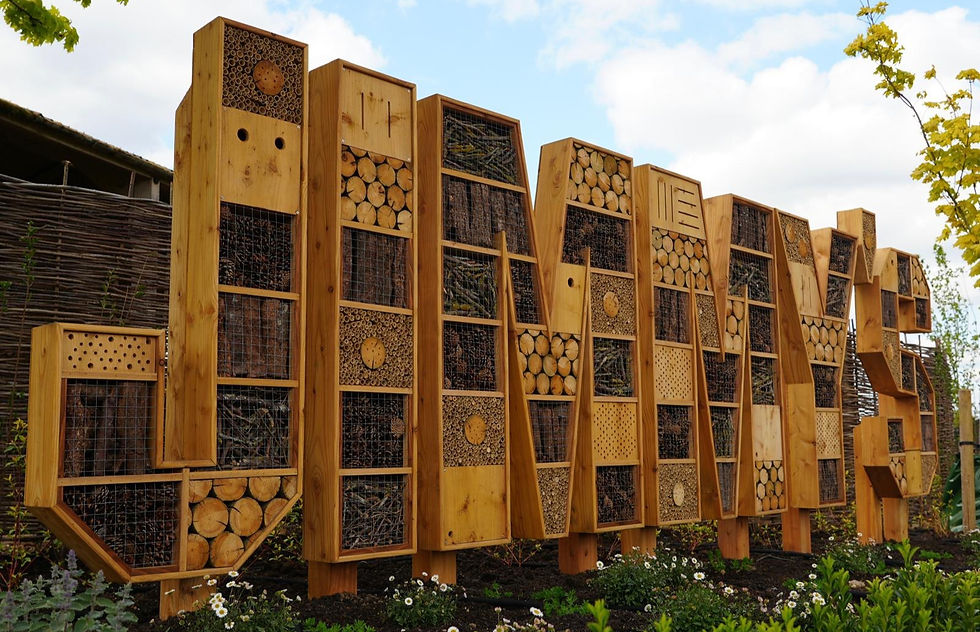
We design and build insect houses that give beneficial species safe, durable shelter in outdoor spaces of all kinds. Our bespoke design service means you can choose the size, style and finish that suits your site, whether that's a school garden, orchard, hotel grounds or a public park. If you're planning a larger biodiversity initiative, we provide tailored designs for commercial, public and conservation spaces.
Using locally sourced timber from Cirencester, including western red cedar, we keep quality high whilst keeping the carbon footprint lower. Hyde Habitats creates structures that look right in the landscape instead of sticking out like an afterthought. If you'd like to discuss your ideas or request a bespoke design, contact our team to get started with your project.


What your insect house can help you achieve
-
Support pollinators in busy landscapes
-
Encourage natural pest control
-
Improve fruit and vegetable production
-
Add educational value outdoors
-
Blend into parks and gardens
-
Protect insects from harsh weather
-
Suit schools, farms and reserves
-
Choose bespoke size and style
Designed to support pollinators and biodiversity
Our insect houses are shaped around the species you want to encourage and the setting they need to sit within. We work closely with councils nationwide on parkland and nature reserve areas, and we also create wellness-focused features for hotels and hospitality spaces. That means your build can do an ecological job whilst still looking smart and welcoming to visitors. Small habitats can have a meaningful effect on local ecosystems, especially where pollinators need safe places to shelter and nest.
Frequently asked questions
